
 +86 13505025697


What Determines Toilet Paper Making Machine Price? A B2B Guide to Cost, Configuration, and ROI
June 26, 2026
If you are evaluating toilet paper making machine price for a new tissue converting project or an equipment upgrade, the short answer is this: the price can range from a relatively modest investment for a basic rewinding setup to a much larger budget for a fully automatic toilet paper production line with embossing, lamination, cutting, conveying, and packaging. In other words, there is no single universal number. The real price depends on the machine configuration, output target, automation level, finished roll specifications, and the production strategy behind your business.
For example, a local converter that only needs standard toilet rolls for regional wholesalers may choose a simpler rewinding line with moderate speed and lower labor automation. A private-label manufacturer serving supermarkets may need a more advanced line with stable perforation, decorative embossing, glue lamination, and integrated packaging. Both projects involve toilet paper converting, but the required machine investment is very different. That is why serious buyers do not ask only “What is the toilet paper making machine price?” They also ask what functions are included, how much output the line can support, and how quickly the investment can be recovered through finished roll sales.
This article explains the main factors that affect toilet paper making machine price, what equipment is usually included in a production line, how to estimate the real project budget, and how to choose a machine configuration that matches your factory’s growth plan.
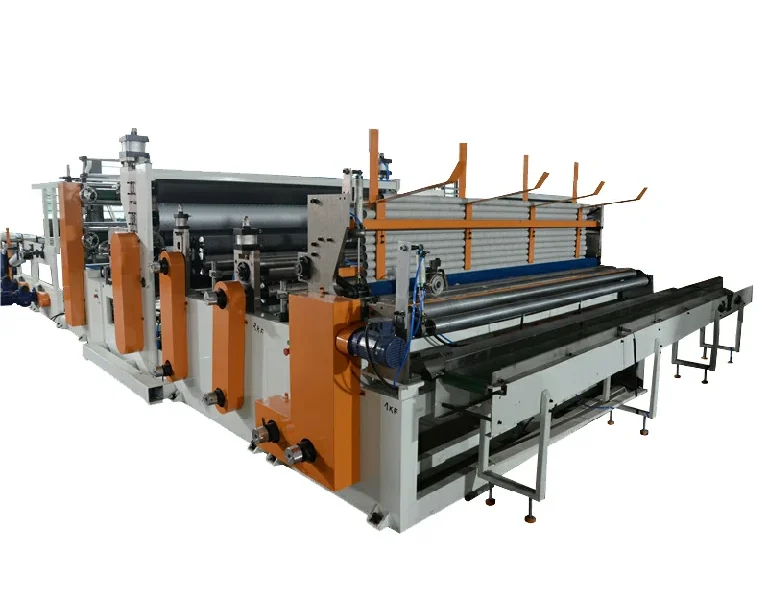
Why Toilet Paper Making Machine Price Varies So Much
The price difference between one toilet paper machine and another is rarely random. It is usually tied to a set of technical and commercial variables. A tissue converting line is not just a motor and a steel frame. It is a system that controls unwinding, embossing, perforating, rewinding, cutting, and sometimes packaging. Each added function changes the cost structure, but it can also change the factory’s output capacity, labor efficiency, and finished product quality.
Machine scope is the first pricing variable
In B2B purchasing, “toilet paper making machine” can mean different things. Some buyers use it to describe only the rewinding machine. Others mean a complete toilet paper production line that includes rewinding, log accumulation, log saw cutting, and packing. When comparing quotations, the first task is to confirm whether you are comparing a single machine, a converting line, or a turnkey project.
A basic line may include jumbo roll unwinding, perforation, and rewinding. A more advanced line may add embossing, glue lamination, core feeding, automatic tail sealing, log transfer, and packaging. The more integrated the system, the higher the machine price. However, the higher configuration often reduces labor input and improves consistency, which can lower production cost over time.
Production speed and output capacity directly affect investment level
Higher output requires a stronger machine structure, more precise web control, better servo systems, and more reliable tension management. A factory producing a few thousand rolls per day can operate with a different line than a plant targeting high-volume supermarket supply. When speed increases, the machine must handle web stability, roll tightness, perforation accuracy, and continuous operation without compromising product quality.
That is why two machines with a similar appearance may have very different prices. One may be suitable for basic local production, while the other is built for continuous industrial converting with stricter output expectations.
Automation level changes both price and labor cost
A semi-automatic machine can reduce initial capital pressure, but it usually needs more operator involvement. A fully automatic line may cost more upfront, yet it often lowers labor intensity, reduces handling errors, and improves output rhythm. For many factories, especially in markets where labor costs are rising, automation is no longer just a convenience. It is part of the return-on-investment calculation.
What Equipment Is Included in a Toilet Paper Production Line?
To understand toilet paper making machine price, buyers need to look at the complete production flow. A toilet paper line converts jumbo tissue rolls into finished toilet rolls that can be packed and sold. The line may be compact or highly integrated, depending on the target market and budget.
In a standard configuration, the process begins with unwinding the jumbo roll. The paper web then moves through embossing or lamination if needed, followed by perforation and rewinding into long logs. These logs are cut into finished roll widths and transferred for packaging. In a more advanced factory, this flow is linked through automatic conveyors and synchronized control systems.
Typical machine sections in a toilet paper converting project
- Jumbo roll stand and unwinding system
- Embossing or lamination section
- Perforation and rewinding system
- Core feeding device or coreless rewinding setup
- Log accumulator and transfer section
- Log saw cutting machine
- Roll conveying and counting system
- Single-roll or multi-roll packaging equipment
A factory that only needs a core converting function may invest in a single Toilet paper rewinding machine. A manufacturer targeting higher-end retail products may require a much more complete line.
The Main Factors That Shape Toilet Paper Making Machine Price
To make a smart equipment decision, buyers should break down machine price into specific cost drivers. The following factors have the greatest impact on quotation level and long-term operating value.
1. Product specification and finished roll positioning
The type of toilet paper you plan to sell matters greatly. Economy toilet rolls for wholesale distribution are different from premium embossed retail products. If your market requires higher softness perception, stronger visual texture, or laminated multi-ply rolls, the machine configuration will become more complex.
For example, if you want to produce premium products with better ply bonding and more attractive surface patterns, you may need a Toilet paper embossing machine as part of the line. This increases the investment, but it also creates more product differentiation and can support higher-margin toilet roll sales.
2. Automation and line continuity
Machine continuity is a hidden but critical factor in price. A low-cost line that stops frequently may look attractive on paper, but it can quietly consume profit through downtime, labor inefficiency, and missed output targets. In medium and large factories, continuous production matters because rewinding delays also affect cutting, packing, and delivery schedules.
That is why many manufacturers consider a non-stop toilet paper rewinding machine when they want to improve effective output and reduce stop-start losses. The initial investment is higher than a simpler setup, but the production stability can justify the difference in the right operating environment.
3. Machine width, jumbo roll compatibility, and daily output
Machine width determines what jumbo roll sizes the line can handle. Wider and faster lines usually require more robust engineering and more advanced control systems. Buyers should not select machine width based only on what looks impressive in a brochure. It should match the supply format of their raw material and the production target of the factory.
A line built for frequent large-batch orders needs different engineering from a line intended for smaller, flexible production runs. The wrong width can lead to unnecessary investment or, in the opposite case, capacity bottlenecks that limit future growth.
4. Electrical components and control architecture
Not all control systems are equal. Servo motors, PLC brands, HMI interfaces, sensors, and electrical cabinet design all influence price. They also affect troubleshooting, speed control, roll consistency, and maintenance efficiency. A cheaper line with basic controls may be acceptable for low-output projects. A higher-output factory, however, usually benefits from better automation architecture and easier parameter management.
5. Packaging scope and downstream integration
Some tissue manufacturers already have downstream packing capacity. Others need a full line from jumbo roll to packed toilet rolls. This makes a major difference in project cost. Rewinding and cutting alone require one level of investment. Rewinding, cutting, conveying, counting, and packaging require another.
In practical terms, a complete line may be more expensive at the start, but it can improve workflow, reduce manual handling, and create a cleaner production rhythm.
How to Estimate the Real Budget Beyond the Quoted Machine Price
Many first-time buyers focus on the machine quotation itself and overlook the total project cost. That approach can distort investment planning. The machine is the center of the project, but it is not the whole project. A more useful question is: what will this line cost to install, run, and maintain per unit of finished output?
Budget items that should be included in your project calculation
- Main machine or production line quotation
- Freight, customs clearance, inland transport, and unloading
- Installation, commissioning, and operator training
- Workshop preparation, air supply, and power setup
- Spare parts package and wear components
- Core supply system, packaging materials, and auxiliary tools
- Future maintenance and expected downtime cost
- Labor cost before and after automation
- Waste rate during rewinding, cutting, and packaging
A machine with a lower purchase price may still create a higher total cost if it consumes more labor, generates more waste, or struggles with stable output. On the other hand, a more advanced line may deliver a better long-term cost per roll if it improves yield and lowers labor dependency.
If you are planning a new tissue converting project, talk to Huaxun about the right machine configuration for your target output and budget.
A Practical Way to Compare Toilet Paper Machine Investment Options
For decision-makers, the most useful way to compare machine price is by business scenario. Instead of asking for one universal price, define the type of project you are building. This will help you compare quotations more accurately and avoid paying for functions you do not need.
Table 1. Typical Toilet Paper Machine Investment Logic by Factory Scenario
| Factory Scenario | Common Configuration Focus | Budget Characteristic | Typical Buyer Goal |
|---|---|---|---|
| Startup converter | Rewinding + basic perforation + manual or semi-automatic handling | Lower entry budget | Launch local toilet roll production quickly |
| Growing regional manufacturer | Automatic rewinding + embossing + cutting | Medium investment with better efficiency | Increase output and improve product consistency |
| Premium retail supplier | Embossing + glue lamination + stable rewinding + stronger automation | Higher budget with stronger product differentiation | Serve branded or private-label retail channels |
| Large integrated tissue plant | High-speed rewinding + log saw + conveying + packaging | Higher capital cost but lower labor per roll | Maximize output and streamline operations |
| Existing factory upgrade | Add embossing, rewinding, or automation modules | Flexible modular budget | Improve an old line without replacing everything |
Table caption: Typical investment logic for toilet paper converting equipment by production stage and business model.
This framework shows why machine price should always be evaluated together with product strategy. A factory selling low-cost wholesale rolls has different equipment priorities from a plant producing premium embossed consumer tissue.
How to Choose the Right Toilet Paper Machine for Your Factory
The best machine is not always the cheapest and not always the most advanced. It is the machine that fits your current market and your next growth step. A smart purchasing process begins with operational clarity.
Key questions every buyer should answer before requesting a quotation
- What finished roll diameter, sheet count, and roll width do you want to produce?
- Will you produce standard toilet rolls only, or also kitchen towels and premium laminated products?
- What is your daily or monthly output target?
- Do you need embossing, glue lamination, or decorative patterns?
- Will the line produce core rolls, coreless rolls, or both?
- Do you want a rewinder only, or a complete line with cutting and packaging?
- What is your available workshop space and power supply?
- How many operators do you want to assign to one line?
- Are you building a new project or upgrading an existing converting workshop?
- What type of market are you targeting: economy wholesale, supermarket retail, or private label?
Once these questions are answered, the supplier can recommend a much more accurate configuration. That saves time and reduces the risk of comparing incomplete quotations.
What Decision-Makers Should Prioritize When Comparing Suppliers
Choosing the right supplier is just as important as choosing the right machine. In tissue converting, supplier experience affects machine stability, commissioning speed, training quality, spare parts availability, and future upgrade flexibility. A supplier should not only quote a machine. They should also help the buyer understand what level of line is appropriate for the target market.
Core points to evaluate when comparing suppliers
- Whether the supplier can recommend a machine based on your product and capacity goals
- Whether they offer installation, commissioning, and training support
- Whether they can provide both standalone machines and integrated line solutions
- Whether they understand premium toilet roll production, not just basic converting
- Whether they can support future expansion into kitchen towel or other tissue products
- Whether their machine design balances automation with maintenance accessibility
For many buyers, the safest equipment partner is not the one with the lowest quote. It is the one that can align machine configuration with factory economics and production planning.
FAQ
1. What is the average toilet paper making machine price?
There is no single average price because machine scope differs widely. A basic rewinding setup costs much less than a fully automatic line with embossing, cutting, conveying, and packaging.
2. Why do toilet paper machine quotations vary between suppliers?
Quotations vary because of differences in machine width, speed, automation level, electrical components, embossing options, packaging scope, and customization. Some quotations also include services that others exclude.
3. Is a rewinding machine enough to start a toilet paper business?
It depends on your current factory setup. If you already have cutting and packaging capacity, a rewinder may be enough. If you are building a new project from scratch, a more complete line is usually more practical.
4. Does embossing increase the cost of a toilet paper production line?
Yes. Embossing adds machine modules and process complexity, which increases equipment cost. However, it can also improve product appearance, consumer perception, and market positioning.
5. Should I buy a fully automatic line or a semi-automatic line?
That depends on your output target, labor cost, and growth plan. Fully automatic lines usually require higher initial investment but can reduce labor intensity and improve output consistency.
6. What information should I send to get an accurate quotation?
You should provide target output, finished roll size, roll diameter, ply requirements, embossing needs, power supply, workshop layout, and whether you need rewinding only or a complete line.
Conclusion
Toilet paper making machine price is not just a procurement number. It is a reflection of your production model, product strategy, and operating goals. The right machine investment depends on what you want to produce, how much you need to produce, and how efficiently you want the line to run. For one factory, a simple rewinding setup may be the right choice. For another, only a fully integrated line can support the required output and product quality.
The best way to control investment risk is to compare machine options based on real production needs rather than headline price alone. When machine configuration, automation level, and product positioning are aligned, the toilet paper line becomes more than a cost center. It becomes a stable profit engine for the tissue business.
About Huaxun
Huaxun is a professional toilet paper making machine supplier focused on tissue converting solutions for growing manufacturers, private-label producers, and industrial hygiene paper investors. Our equipment range covers rewinding, embossing, lamination, cutting, and integrated toilet paper production line solutions. We work with B2B customers to match machine configuration with output targets, product positioning, and long-term factory planning. Whether you need a compact converting setup or a more automated tissue line, Huaxun aims to deliver practical equipment solutions built for efficiency, reliability, and future expansion.
Cost Breakdown Across the Production Line
A complete toilet paper production system is not a single machine but a combination of forming, converting, and rewinding systems. Each section contributes to the total investment.
Raw Material Preparation and Forming Stage
This stage determines the base sheet quality. The equipment cost here is influenced by wire mesh systems, pulp control units, and drying stability systems.
Converting and Functional Enhancement Stage
This is where most value-added features are added. Machines can include printing, embossing, and glue systems.
A common mid-range solution is the glue lamination toilet paper machine which provides cost-efficient pattern enhancement and structural reinforcement for commercial tissue products.
Rewinding and Output Efficiency Stage
Rewinding systems are essential for maintaining roll consistency and production speed stability. High-performance systems reduce downtime and increase yield efficiency.
A more advanced configuration such as a non-stop toilet paper rewinding machine significantly increases production continuity and reduces material waste during roll changes.
Price Range Overview for Different Machine Configurations
The following table summarizes typical cost ranges based on production scale and automation level.
| Machine Type | Automation Level | Estimated Cost Range (USD) | Typical Output Capacity | Application Scenario |
|---|---|---|---|---|
| Semi-automatic rewinding line | Low to Medium | 10,000 – 40,000 | Small scale | Local distributors, startups |
| Standard converting line | Medium | 40,000 – 120,000 | Mid-scale production | Regional factories |
| Fully automatic production line | High | 120,000 – 300,000+ | Industrial scale | Large manufacturers & exporters |
| High-end integrated system | Very High | 300,000 – 600,000+ | Continuous mass production | Global OEM suppliers |
How Machine Configuration Impacts Long-Term Production Cost
While initial investment is important, long-term operational cost often determines profitability.
Energy Consumption and Efficiency
Modern machines are designed to reduce power consumption per ton of paper produced. High-efficiency motors and optimized drying systems significantly reduce operating expenses.
Waste Reduction Systems
Advanced rewinding and tension control systems minimize breakage and defective output. Even a 1–2% reduction in waste can translate into substantial yearly savings.
Labor Cost Optimization
Fully automated systems reduce the need for manual intervention. Operators are mainly responsible for monitoring rather than direct control.
Choosing the Right Machine Based on Budget and Market Position
Different market strategies require different machine configurations.
Entry-Level Production Strategy
For new entrants, a compact system with moderate automation is usually sufficient. The focus is on stable output rather than premium design features.
Mid-Range Competitive Strategy
Factories targeting supermarkets or regional distributors often invest in machines with embossing and lamination functions to increase product value.
A widely used option is the glue lamination toilet paper machine because it balances cost and visual product quality effectively.
High-End OEM and Export Strategy
Large manufacturers focus on fully integrated systems with non-stop production capability and advanced automation to support continuous export-level demand.
To receive a customized quotation and production line recommendation based on your factory capacity and target market, you can explore tailored solutions here: Contact us for expert toilet paper machine consultation
Typical Price Logic by Project Type and Investment Stage
Instead of looking for one universal number, B2B buyers should estimate machine cost by project type. The right question is not only “how much is toilet paper making machine,” but also “what kind of toilet paper business am I building?” A startup converter with one product format, a private-label manufacturer serving supermarkets, and a mature tissue factory upgrading an old line will all have different equipment priorities.
The table below shows a practical way to think about pricing and configuration. It is not a universal quotation list, because actual prices depend on technical specifications and supplier scope. However, it helps buyers match investment level with production goals.
Table 1. Typical Toilet Paper Machine Investment Logic by Project Type
| Project Type | Typical Configuration Focus | Investment Characteristic | Best For |
|---|---|---|---|
| Entry-level converting setup | Rewinding + perforation + basic cutting | Lower initial investment, more manual involvement | New tissue startups, local converters |
| Mid-range automatic line | Automatic rewinding + embossing + cutting + transfer | Balanced cost and productivity | Growing regional manufacturers |
| Premium retail roll line | Servo control + glue lamination + stable perforation + packaging | Higher capex, stronger product differentiation | Private-label suppliers, branded tissue producers |
| Turnkey integrated plant line | Rewinding + cutting + packaging + conveying + factory planning | Highest investment, strongest automation and throughput | Large investors, export-focused tissue factories |
| Upgrade project for existing factory | Add-on rewinder, lamination, or packaging module | Modular budget based on current line condition | Existing converters improving efficiency |
This framework helps procurement teams compare offers more intelligently. A lower quote may exclude key modules, while a higher quote may include the automation needed to reduce labor, improve uptime, and support premium SKUs.
Which Machine Configuration Fits Different Tissue Business Models?
Toilet paper production projects are not all built for the same market. Some factories target high-volume value rolls. Others focus on embossed premium products, kitchen towels, or multi-SKU private-label orders. The best machine configuration depends on the commercial model behind the factory.
For startups and local market entrants
A startup usually needs a stable, cost-controlled line that can produce mainstream toilet rolls with manageable labor input. In this case, the goal is not to buy the most complex line on day one. It is to secure consistent quality, acceptable output, and a clear path for future upgrades. A compact line with reliable rewinding and cutting may be the right first step if the market is price-sensitive and product differentiation is limited.
For factories targeting retail shelf products
Retail products require more than basic roll formation. Roll appearance, embossing definition, ply bonding, roll tightness, perforation consistency, and packaging presentation all matter. If your customers are supermarkets, distributors, or private-label brands, you should consider a configuration that supports premium converting features. A glue lamination toilet roll machine can help create stronger ply bonding and a more premium visual finish for kitchen towel and toilet roll applications.
For factories that want maximum uptime and labor reduction
If labor availability is tight or output targets are aggressive, line continuity becomes critical. In these cases, production interruptions can quietly drain profit. A non-stop toilet paper rewinding machine is valuable because it reduces stoppages during rewinding and helps maintain higher effective output over long production runs. That matters in factories where every lost minute echoes through cutting, packing, and shipping.
For growing manufacturers planning a full tissue portfolio
Many converters do not stop at one product. They begin with toilet paper and later expand into kitchen towels, napkins, facial tissue, or away-from-home products. If that is your strategy, it makes sense to choose a supplier that can support modular expansion and integrated converting planning. A broader toilet paper manufacturing machine solution portfolio makes future line matching easier and reduces the friction of later upgrades.
What Questions Should Buyers Ask Before Requesting a Quotation?
A good quotation begins with a good technical brief. When buyers send only a short inquiry such as “I need toilet paper machine price,” the reply is often too generic to support a real purchasing decision. To get a useful offer, you should define the production objective first. That allows the supplier to recommend the correct machine width, speed, automation level, and downstream configuration.
Key information to prepare before asking for a quotation
- What finished product will you make: toilet rolls only, or toilet rolls plus kitchen towels?
- What is your target roll width, sheet count, and finished roll diameter?
- How many jumbo rolls do you plan to process per day or per month?
- Do you need embossing, glue lamination, or printed patterns?
- Will the line produce core rolls, coreless rolls, or both?
- Do you need rewinding only, or a full line with cutting and packaging?
- What voltage and workshop space are available?
- What level of automation do you want to achieve?
- Are you building a new plant or upgrading an existing factory?
- Which market are you supplying: economy retail, premium retail, or commercial hygiene?
When these parameters are clear, the quotation becomes much more useful. It can reflect actual output planning, product strategy, and installation conditions rather than a rough benchmark price.
The Difference Between Entry Level and Industrial Scale Production
Small scale tissue manufacturing still exists in many developing and regional markets, especially where labor costs remain relatively low. These operations often begin with semi automatic systems that allow entrepreneurs to enter the market with limited capital investment.
An entry level setup typically includes a rewinding machine, a manual or semi automatic band saw cutter, and a simple sealing or packaging unit. These systems can be sufficient for local distribution, but they usually rely heavily on manual operation. Productivity remains limited, and product consistency may vary depending on operator experience.
Industrial scale manufacturers operate very differently. Their goal is not merely to produce rolls of tissue paper, but to create stable, high volume output with minimal downtime and predictable quality control. In these environments, automation becomes essential rather than optional.
A modern fully automatic toilet paper making machine is designed to reduce manual intervention across nearly every stage of production. Automatic paper feeding, intelligent tension control, synchronized perforation, automatic core transfer, and integrated packaging systems allow factories to maintain high production efficiency even during continuous operation.
This difference dramatically affects both investment cost and long term profitability. Small factories often prioritize lower initial spending, while larger manufacturers focus on labor reduction, production stability, and operational scalability.
Understanding the Role of Rewinding and Converting Equipment
In tissue manufacturing, many buyers initially assume that one machine handles the entire production process. In practice, toilet paper production is divided into several interconnected stages, and each stage affects both investment cost and final product quality.
The rewinding stage is particularly important because it directly determines roll tightness, perforation consistency, and production speed. During this process, jumbo tissue rolls are transformed into consumer sized toilet paper logs through rewinding and perforation systems.
A modern Toilet paper rewinding machine may include automatic core feeding, embossing, trimming, glue application, and tension adjustment functions. These features improve product appearance and reduce material waste, especially during high speed production.
Converting equipment expands the process further by integrating rewinding, cutting, embossing, lamination, and packaging into a continuous automated workflow. Advanced converting lines help manufacturers reduce labor dependency while improving production consistency.
A high performance toilet paper converting machine can also support decorative embossing and multi color printing, which are increasingly important for premium consumer markets where packaging and visual presentation influence purchasing decisions.
This is one reason why the final investment in a complete toilet paper production line often exceeds the initial expectations of first time investors.
Why Automation Is Changing the Economics of Tissue Manufacturing
Automation has transformed the tissue industry over the past decade. In older production environments, factories relied heavily on manual labor for paper transfer, roll handling, packaging, and quality inspection. While this reduced initial equipment costs, it also introduced several operational weaknesses.
Manual operations often create inconsistent product quality, slower production speed, and higher labor turnover. As labor costs rise globally, many manufacturers now realize that automation is not simply a technological upgrade but an economic necessity.
Servo driven systems have become especially important in modern tissue machinery because they maintain stable synchronization during high speed operation. Accurate tension control reduces paper breakage and improves embossing consistency, which directly affects final product appearance.
Automation also improves data visibility. Intelligent control systems now allow factory managers to monitor machine speed, production efficiency, downtime causes, and material consumption in real time. Instead of relying on manual observation, manufacturers can optimize performance using production data.
For large scale factories, this operational visibility becomes a powerful competitive advantage.
The Hidden Costs Buyers Often Overlook
One of the most common mistakes in tissue machinery purchasing is focusing entirely on equipment price while ignoring operational sustainability.
Energy consumption is a major example. Older or lower quality machines may consume significantly more electricity due to inefficient motor systems and unstable mechanical synchronization. Over several years of operation, those energy costs can exceed the initial savings from buying cheaper equipment.
Maintenance is another overlooked factor. Machines with poor structural stability often require more frequent repairs, replacement parts, and production stoppages. Downtime is particularly expensive in tissue manufacturing because even short interruptions can disrupt packaging schedules and delivery commitments.
Technical support also matters far more than many first time investors expect. Reliable suppliers provide installation guidance, operator training, remote troubleshooting, and spare parts support. Without responsive technical assistance, even minor machine issues can create costly production delays.
This is why experienced buyers evaluate suppliers not only as machine manufacturers but as long term operational partners.
Which Technical Specifications Affect Machine Pricing the Most?
Machine specifications determine not only the purchase price but also production performance.
Production Speed
Higher production speed requires stronger frames, better balancing systems, precision machining, and advanced motion control.
Machines operating above 300 meters per minute generally require premium components.
Automation System
Modern production lines increasingly adopt:
- Siemens PLC
- Mitsubishi PLC
- Touchscreen HMI
- Servo synchronization
- Automatic tension control
- Remote diagnostics
These technologies improve production stability but also increase equipment value.
Embossing and Lamination
Manufacturers producing premium household tissue often require:
- Steel-to-rubber embossing
- Steel-to-steel embossing
- Point-to-point lamination
- Edge embossing
- Decorative patterns
Each additional processing function contributes to overall equipment pricing while enhancing finished product quality.
Energy Consumption
Efficient motors, optimized transmission systems, and intelligent control software reduce electricity usage during continuous production.
Although energy-efficient machines may cost more initially, operating expenses decrease throughout the equipment lifecycle.
If you are comparing machine configurations for your next investment, you can contact our engineering team for a customized production solution and quotation.
How Should Buyers Evaluate Total Ownership Cost Instead of Purchase Price?
Many procurement managers focus only on equipment quotations.
Professional buyers evaluate Total Cost of Ownership (TCO).
The complete investment includes:
- Machine purchase
- Ocean freight
- Installation
- Commissioning
- Operator training
- Spare parts
- Maintenance
- Electricity
- Labor
- Downtime losses
- Product waste
A machine with a higher purchase price may generate significantly lower operating costs over ten years.
For example, a production line that reduces waste by only two percent can save thousands of dollars annually for large-scale tissue manufacturers.
Production Stability Creates Hidden Value
Unexpected downtime affects customer delivery schedules.
Stable equipment helps manufacturers:
- Maintain delivery commitments
- Reduce customer complaints
- Lower maintenance costs
- Improve factory utilization
- Increase production planning accuracy
These operational benefits are often worth more than the initial price difference between competing suppliers.
Which Factors Have the Greatest Impact on Machine Cost?
Understanding cost drivers helps investors avoid underestimating the total project budget.
Production Capacity
Production capacity is one of the largest contributors to equipment pricing.
Machines designed to process large parent rolls at high speeds require more sophisticated engineering, stronger mechanical structures, and advanced automation systems.
A small factory producing a few thousand rolls daily has very different equipment requirements compared to a tissue manufacturer targeting nationwide distribution.
Higher capacity equipment generally offers lower unit production costs but requires a larger initial investment.
Automation Level
Automation significantly influences both machine price and operating efficiency.
A basic system may require multiple operators to perform rewinding, cutting, packaging, and material handling tasks.
By contrast, a fully automatic toilet paper making machine integrates these processes into a seamless production flow, reducing labor costs while improving consistency and output quality.
Although automated systems have higher acquisition costs, they often deliver better long-term profitability through increased productivity and reduced operational expenses.
Machine Configuration
Different production lines may include various optional features such as:
- Embossing units
- Glue lamination systems
- Color printing modules
- Automatic core feeding
- Automatic tail sealing
- Robotic packaging systems
Each additional function increases overall project cost but may also create product differentiation opportunities in competitive markets.
Beyond Machine Price: What Other Costs Should Buyers Consider?
One of the most common mistakes made by first-time investors is focusing exclusively on machine pricing.
In reality, the equipment itself represents only one portion of the total investment.
Raw Material Costs
Parent jumbo rolls account for the largest ongoing production expense in most tissue manufacturing operations.
The quality, ply structure, basis weight, and supplier selection directly affect both production costs and final product positioning.
Factory Infrastructure
Production facilities require adequate space, power supply, ventilation systems, storage areas, and logistics access.
Infrastructure upgrades may be necessary before equipment installation.
Labor and Training
Even highly automated systems require skilled operators, maintenance personnel, and production supervisors.
Proper training ensures machines operate efficiently and achieve expected productivity levels.
Maintenance and Spare Parts
Preventive maintenance programs help maximize equipment lifespan and reduce unexpected downtime.
When evaluating suppliers, buyers should consider spare parts availability, technical support responsiveness, and after-sales service capabilities.
How Does Equipment Configuration Affect Return on Investment?
Many buyers initially focus on purchasing the lowest-cost equipment available.
However, long-term profitability is often determined by production efficiency rather than initial machine price.
Higher Efficiency Creates Competitive Advantages
Modern converting lines can significantly reduce labor requirements while increasing output consistency.
For example, an advanced toilet paper converting machine may include automatic embossing, perforating, rewinding, and cutting functions within a single integrated system.
This level of automation reduces production bottlenecks and improves operational efficiency.
Product Quality Impacts Market Positioning
Premium tissue products often command higher margins.
Advanced equipment enables manufacturers to produce:
- Embossed toilet tissue
- Laminated toilet tissue
- Printed tissue products
- High-softness premium tissue grades
These value-added features help manufacturers differentiate themselves in crowded markets.
Reduced Waste Improves Profitability
Efficient production systems minimize paper waste, lower reject rates, and improve material utilization.
Over time, these operational savings can substantially offset the higher purchase price of advanced equipment.
Mechanical Components Directing Capital Investment Metrics
The primary technical force driving tissue machinery pricing is the engineering design of the primary log rewinding system. High-volume industrial operations require heavy-duty cast iron frames, dynamic balanced rollers, and sophisticated multi-servo drive systems to run continuously without breakdown.
Low-speed machinery assemblies generally utilize simple mechanical step-pulleys, limiting production speeds to under 150 meters per minute and requiring manual operator oversight. Enterprise-grade setups deploy advanced computer networks that manage independent motor speeds in real time, maintaining consistent roll winding densities at high speeds.
High-performance production environments utilize a specialized non-stop toilet paper rewinding machine setup to achieve non-stop material processing cycles. These advanced systems execute automated log extractions, feed fresh core tubes, and trim sheet tails instantly, keeping assembly lines running at maximum capacity.
The Cost of Embossing Hardware and Lamination Systems
The aesthetic design, paper sheet thickness, and liquid absorption performance of finished retail bathroom rolls depend on the machine embossing section. The type of engraving machinery utilized to manufacture these heavy steel rollers directly affects the ultimate procurement price of the equipment.
Structural Costs of Laser-Engraved Embossing Arrays
Standard steel-to-rubber mechanical embossing rollers are cost-effective to produce, making them ideal for budget-conscious manufacturing startups targeting basic wholesale consumer markets. However, advanced laser-engraved steel-to-steel rollers require precision manufacturing, which adds a premium cost layer to your asset acquisition budget.
Integrated Ply Bonding Fluid Delivery Technology
To produce soft, high-absorbency kitchen towels or multi-ply bathroom rolls, factories must integrate specialized ply bonding adhesive networks. Implementing a precision glue lamination toilet paper machine setup adds component costs but allows facilities to manufacture premium, high-margin consumer products. These advanced configurations apply exact micro-dots of colored adhesive across the embossed paper patterns, ensuring excellent ply bonding without stiffening the sheets.
Technical Configuration and Equipment Sourcing Matrix
Procurement managers must compare structural weights, power consumption metrics, and volumetric output capacities when assigning budgets for plant expansions. The detailed table below outlines the exact mechanical parameters and financial price estimates across standard commercial tissue conversion machinery.
| Production Line Model Code | Maximum Processing Speed | Total Power Demand Metric | Embossing Configuration | Approximate Capital Cost Range |
| HX-1575 Entry Setup | 150 Meters Per Minute | 11 Kilowatts Total | Single Steel-to-Rubber Roll | $40,000 to $60,000 |
| HX-2200 Medium System | 200 Meters Per Minute | 15 Kilowatts Total | Double Steel-to-Rubber Roll | $70,000 to $110,000 |
| HX-2800 Industrial Line | 250 Meters Per Minute | 22 Kilowatts Total | Point-to-Point Glue Unit | $130,000 to $190,000 |
| HX-3200 Enterprise System | 350 Meters Per Minute | 55 Kilowatts Total | Laser Engraved Steel-to-Steel | $220,000 to $350,000+ |
Table 1: Structural Engineering Parameters, Output Velocities, and Capital Sourcing Price Estimates for Tissue Conversion Systems.
Selecting an optimized machinery model prevents businesses from spending too much on unnecessary features while ensuring they can hit their production targets. Integrating automated log slitting saws and high-speed packaging equipment keeps the production flow smooth, avoiding bottlenecks during heavy processing schedules.
Automation Software Integration and Electronic Controls
Modern high-speed tissue conversion setups rely heavily on advanced programmable logic controller networks to minimize manual labor and human error. These electronic control systems coordinate paper web feed rates, control perforation blade hits, and manage roll log edge alignment automatically.
- Touchscreen human-machine interfaces allow operators to adjust sheet counts per roll and tweak perforation distances within a few seconds.
- Electronic sensor loops monitor parent roll diameter depletion continuously, adjusting electromagnetic brake tensions to prevent paper snapping.
- Automated safety systems trip immediate machine shutdowns if sensors spot an unexpected paper web tear along the processing path.
Deploying a fully automated glue lamination toilet roll machine setup stabilizes total manufacturing output while lowering workplace safety risks. These advanced machines combine core loading, embossing, glue lamination, and log rewinding into a single continuous workflow managed from one digital station.
If your plant engineering department requires custom factory floor blueprints or an immediate procurement quote for conversion machinery, please contact our industrial equipment specialists directly to review your project.
These computerized control systems also generate real-time performance reports, tracking total shift outputs, raw material usage, and error codes automatically. Factory managers use this data to identify hidden inefficiencies, schedule preventive maintenance windows accurately, and reduce long-term operating costs.
Material Slitting Precision and Automated Packing Networks
The tissue manufacturing workflow extends past the initial log rewinding step, as long wound paper rolls must be split into retail consumer widths. High-speed rotary log saws execute quick vertical cuts through compressed paper roll logs, ensuring smooth roll faces without crushing the edges.
Automated diamond sharpening systems hone the circular saw blades continuously during active operation to maintain a perfectly square cutting face over long shifts. The individual slit rolls are then transferred via conveyor belts into high-speed wrapping systems that seal packs in protective plastic film.
Investing in a complete, high-volume toilet paper manufacturing machine production line coordinates these separate finishing steps into a unified automated system. This layout reduces manual product handling, prevents exterior product contamination, and creates a uniform retail appearance across massive batches.
Modern automated packaging assets can package rolls into multiple commercial formats, including single hotel rolls, standard four-packs, or massive wholesale multi-packs. This packaging flexibility helps manufacturers react quickly to shifting customer orders, lower plastic wrap waste, and optimize shipping container space.
How Does Daily Manufacturing Output Capacity Directly Dictate the Core Machinery Acquisition Cost?
Industrial plant managers must recognize that total daily output volume stands as the most influential factor when evaluating the base equipment price. High-capacity processing systems utilize reinforced steel structures, heavy-duty industrial bearings, and advanced electronic drive configurations to withstand continuous high-speed mechanical stress. Consequently, high-speed automated lines command a premium initial price due to the advanced engineering required to prevent structural vibrations during long shifts.
Furthermore, machine width specifications determine the scale of the steel rollers, the drying cylinder dimensions, and the required foundation footprint. Wider machinery processes larger parent paper rolls efficiently but demands more powerful main motors and larger structural frames to prevent metal fatigue. Balancing your initial sales forecast against your physical plant space ensures that you select a machinery size that maximizes capital efficiency.
What Engineering System Configurations Impact the Total Capital Cost of Tissue Converters?
The exact configuration of your downstream conversion lines alters your total capital requirements as much as the primary paper forming unit. A standard tissue conversion line includes slitting modules, decorative embossing rolls, pneumatic perforation systems, and automated log winding units working in unison. Importers often select modular component layouts, adding specialized folding or packaging stations later as local consumer market demand expands.
- Slitting Sections: High-speed circular blades cut wide parent sheets into precise consumer widths without creating excessive paper dust.
- Embossing Units: CNC-engraved steel or rubber rollers apply specific textures to improve sheet bulk, liquid absorption, and visual appeal.
- Perforation Systems: Helical blade assemblies punch uniform, easy-tear lines across the moving paper web at exact millimeter intervals.
Integrating advanced custom features like deep multi-color printing attachments or complex edge-embossing tools naturally pushes the equipment price upward. However, these specialized modules allow factories to manufacture premium high-margin products that stand out on retail shelves. Evaluating these technical upgrades during the planning phase helps production managers build a highly accurate long-term return on investment projection.
How Do Advanced Folding Systems Shape the Initial Processing Capital Requirements?
Manufacturing specialized facial tissues requires high-precision folding machinery that handles low-basis-weight paper webs without tearing the delicate fibers. The structural engineering inside these folding sections relies on advanced vacuum suction systems or mechanical jaws to alternate individual sheet overlays continuously. A premium facial tissue paper machine utilizes synchronized servo motors to maintain absolute geometric accuracy across the entire web pathway.
| Machine Configuration Type | Speed and Output Target | Primary Engineering Advantage | Price Influence Level |
| Single-Lane Interfolding | 800 sheets/min per lane | Low energy footprint for regional startups | Entry-Level Capital |
| Multi-Lane Full Automated | 2000 sheets/min per lane | Maximizes labor efficiency in large factories | Premium Enterprise Tier |
| Full Embossing Integration | 150 m/min web velocity | Enhances structural sheet bulk and softness | Moderate Technical Add-on |
Integrating comprehensive surface texture modules like a facial tissue v type folding machine with full embossing increases the physical machinery footprint significantly. This addition raises the total equipment cost but enables the factory to manufacture high-density consumer packs without purchasing external calendar systems. Proactive plant managers specify their exact desired fold geometries early to ensure the machinery builder integrates compatible vacuum pumps.
Why Do Precision Control Technologies Prevent Catastrophic Sheet Tension Breaks?
Relying on manual mechanical tension adjustments frequently exposes manufacturing plants to sudden web breaks, prolonged downtime, and massive paper waste. Modern high-speed systems eliminate these operational risks by installing digital programmable logic controllers and high-resolution optical tension sensors. These automated control loops adjust individual roller velocities in real time, compensating instantly for minute variations in parent roll quality.
Investing in a digital facial tissue paper making machine ensures that your production staff can monitor web tension and roll diameters continuously. The centralized touchscreen interface displays real-time diagnostic alerts, motor temperature readings, and total product counts for the active shift supervisor. This electronic oversight system allows operators to resolve minor tension deviations before they cause expensive line stoppages or mechanical component wear.
If you are planning to optimize your paper manufacturing plant with high-efficiency, commercial-grade tissue production lines, please contact our specialized engineering department today to receive a detailed technical quote.
What Long-Term Maintenance and Utility Factors Alter the Real Cost of Ownership?
Procurement departments often focus exclusively on the initial machinery purchase quote while overlooking the continuous operational utility costs. Large-scale drying sections consume significant amounts of electrical energy and steam to evaporate moisture from the wet pulp web rapidly. Energy-efficient machinery designs incorporate advanced heat recovery systems that redirect exhaust steam back into the pre-heating stages, cutting monthly fuel bills.
Additionally, the availability of localized replacement parts like slitting blades, pneumatic seals, and timing belts dictates your long-term downtime risks. Choosing machinery built with standard international electrical components, such as Siemens drives or Omron sensors, simplifies your local repair logistics. This standardization ensures that your internal maintenance team can source replacement parts quickly, avoiding long international shipping delays.
References
- Wikipedia, “Tissue paper”
https://en.wikipedia.org/wiki/Tissue_paper - Britannica, “Papermaking”
https://www.britannica.com/technology/papermaking - TAPPI, tissue and paper industry resources
https://www.tappi.org/

