
 +86 13505025697


What Is the Difference Between Semi Automatic and Fully Automatic Toilet Paper Making Machines?
August 13, 2026
The main difference between semi automatic and fully automatic toilet paper making machines lies in how much production work the equipment performs without manual intervention. A semi automatic system requires operators to handle several steps, including core loading, log handling, cutting, or packaging. A fully automatic system integrates more of these operations into one continuous workflow. The better choice depends on production volume, labor availability, product specifications, factory space, and investment plans.
For example, a small tissue converter may start with a semi automatic toilet paper manufacturing machine because its output target is moderate and labor costs remain manageable. A larger manufacturer supplying supermarkets may prefer a fully automatic toilet paper production line because continuous feeding, rewinding, cutting, and conveying can reduce manual handling.
The decision should therefore not focus only on machine price. Buyers should compare production capacity, automation level, labor requirements, product flexibility, maintenance needs, energy consumption, and expected return on investment. A modern toilet paper machine can include unwinding, embossing, perforating, rewinding, core feeding, log cutting, and other functions. The exact configuration depends on the production target and finished product requirements.
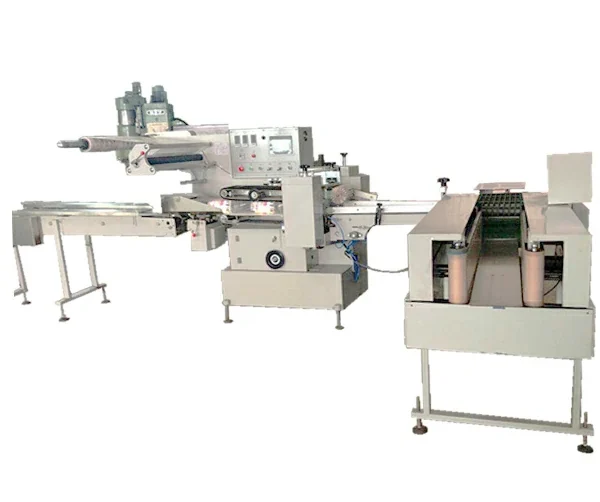
How Do Semi Automatic and Fully Automatic Toilet Paper Machines Work?
Both machine types convert parent jumbo rolls into smaller toilet paper rolls. Their basic production principles remain similar.
The parent roll enters the unwinding section. The paper then passes through processes that may include embossing, perforation, lamination, and rewinding. The rewound log moves to cutting equipment, where it becomes individual toilet rolls.
The main difference is the level of integration between these operations.
Semi Automatic Toilet Paper Production
A semi automatic system divides the production process between machinery and operators.
The operator may need to:
- Load parent jumbo rolls
- Install or replace paper cores
- Adjust production parameters
- Transfer finished logs
- Operate a log saw
- Remove finished rolls
- Handle packaging
The exact workload depends on the machine configuration.
A semi automatic toilet paper maker machine can suit businesses that have moderate production requirements. It can also work well for companies entering the tissue converting industry.
The main advantage is a lower initial automation requirement. The buyer can invest in essential converting equipment first and expand the production system later.
However, manual handling creates additional labor requirements. Production consistency may also depend more heavily on operator experience.
Fully Automatic Toilet Paper Production
A fully automatic system integrates more production stages.
Depending on the configuration, the line may include automatic core feeding, automatic rewinding, automatic log transfer, automatic cutting, counting, and conveying.
Some systems also connect finished-roll handling with packaging equipment.
A fully automatic toilet tissue paper making machine can therefore reduce manual intervention during repetitive production stages.
The machine still requires trained operators. Automation does not eliminate the need for machine setup, quality checks, maintenance, and troubleshooting.
Instead, it changes the operator’s role from continuous manual handling toward monitoring and process control.
Basic Comparison
| Factor | Semi Automatic System | Fully Automatic System |
|---|---|---|
| Initial investment | Generally lower | Generally higher |
| Manual handling | Higher | Lower |
| Labor requirement | Higher | Lower |
| Production continuity | More operator-dependent | More automated |
| Capacity potential | Suitable for moderate output | Suitable for higher output |
| Flexibility | Often easier for smaller operations | Depends on line configuration |
| Maintenance | Simpler in some configurations | More systems require maintenance |
| Factory integration | Limited | Higher |
| Expansion potential | Good for phased investment | Strong for larger operations |
Caption: General comparison between semi automatic and fully automatic toilet paper production systems.
Actual performance depends on machine configuration, raw material, finished roll specifications, and operating conditions.
Which Production Factors Should Buyers Compare?
Machine automation is only one purchasing criterion.
A buyer should evaluate the entire production system before selecting a machine.
Production Capacity
Production capacity should match the company’s sales and distribution requirements.
A manufacturer supplying local wholesalers may not need the same output as a factory supplying multiple national retail chains.
Buyers should therefore define a realistic production target.
Capacity discussions should include:
- Production speed
- Finished roll diameter
- Paper width
- Number of plies
- Perforation distance
- Rewinding method
- Working hours
- Expected operating efficiency
Machine speed alone does not determine actual daily output.
For example, frequent product changes can reduce effective production time. Material changes and maintenance can also affect operating hours.
Labor Requirements
Labor cost can influence the long-term economics of a production line.
A semi automatic system may require several operators for material handling and finished-product transfer.
A fully automatic line can reduce some repetitive manual tasks.
However, the buyer should also consider technical staff.
Automated equipment may require personnel who understand electrical controls, sensors, pneumatic systems, servo drives, and PLC functions.
The right labor model depends on the local workforce and technical capabilities.
Product Specifications
The finished product should influence machine selection.
Buyers should define the required:
- Roll diameter
- Core diameter
- Sheet length
- Perforation distance
- Number of plies
- Paper width
- Embossing pattern
- Embossing depth
- Roll tightness
- Packaging format
Perforation is particularly important because it affects how users separate sheets.
ISO 12625-12:2023 provides a test method for measuring the tensile strength of perforated tissue paper lines and calculating perforation efficiency.
This illustrates why product specifications should be translated into measurable production requirements.
When Is a Semi Automatic Toilet Paper Machine a Better Choice?
A semi automatic system can make sense when the business is building production capacity gradually.
It may also suit manufacturers that prioritize lower initial investment and accept higher labor involvement.
Small and Medium Production Projects
A smaller tissue converting business may not need a highly automated production line from the beginning.
For example, a company may have established local demand for standard toilet rolls but lack the volume required to justify a highly automated system.
A semi automatic configuration can provide a practical starting point.
The company can then add equipment as sales increase.
Markets With Lower Labor Costs
Labor economics differ between countries.
In markets where manual labor remains relatively affordable, a semi automatic machine may have a reasonable operating cost.
The buyer should calculate labor requirements over several years.
A lower machine price does not always mean lower total operating cost.
Buyers With Flexible Production Requirements
Semi automatic systems may also suit businesses that produce different roll specifications.
Operators can handle some production changes manually.
This can be useful for smaller orders with different customer requirements.
However, flexibility depends on the specific machine design.
What Are the Limitations?
The main limitation is manual handling.
More manual steps can increase:
- Labor requirements
- Handling time
- Operator dependency
- Production interruptions
- Risk of handling errors
These factors become more important as production volume increases.
A business should therefore consider whether the current production model can support future growth.
When Should Buyers Choose a Fully Automatic Toilet Paper Production Line?
A fully automatic system becomes more attractive when production volume and consistency become major priorities.
It can support a more continuous production workflow.
High-Volume Manufacturing
Manufacturers serving large distributors or retail networks often need stable production.
Manual material handling can become a bottleneck at higher output levels.
A fully automatic toilet paper machine can automate repetitive processes and keep material moving through the production line.
A non-stop rewinding system can be particularly useful for manufacturers that want to reduce interruptions during parent-roll changes. Buyers considering this configuration can review a non-stop toilet paper rewinding machine for a more continuous converting setup.
Reduced Manual Handling
Automation can reduce the number of routine manual operations.
For example, automatic core feeding removes the need for operators to manually install each core.
Automatic log transfer can also reduce handling between rewinding and cutting.
This allows workers to focus more on monitoring and quality control.
Consistent Production
Automation can help maintain repeatable process parameters.
PLC-based controls can manage machine functions according to configured settings.
This can support consistent perforation, rewinding, and production timing.
However, automation does not replace quality control.
Operators still need to check finished rolls and adjust the process when raw material or product conditions change.
Better Integration With Packaging
High-volume operations may benefit from connecting the converting line with counting and packaging equipment.
The result can be a more continuous production workflow.
The appropriate configuration depends on the finished product format.
What Equipment Can Be Added to a Toilet Paper Production Line?
A toilet paper production line does not always consist of one machine.
It can include several connected or independent machines.
Embossing Equipment
Embossing changes the surface structure of tissue paper.
It can create patterns and influence the visual appearance of the finished product.
Some configurations combine embossing with lamination.
For buyers requiring advanced surface patterns, a toilet paper embossing machine can form part of the converting system.
Glue Lamination Equipment
Glue lamination connects multiple tissue plies.
This can help produce multi-ply toilet rolls with a defined structure.
The glue application needs consistent control.
Too much adhesive can affect product feel and production cost. Insufficient bonding can create separation between plies.
A buyer developing multi-ply products can consider a glue lamination toilet paper machine when comparing equipment configurations.
Toilet Roll Cutting Equipment
After rewinding, the large paper logs need to be cut into individual rolls.
The cutting system must match the finished roll dimensions.
Knife condition also affects cut quality.
Regular maintenance helps maintain clean and consistent cuts.
Packaging Equipment
Finished toilet rolls may enter a packaging system after cutting.
Packaging can include individual wrapping, multi-roll packs, or larger bundles.
The buyer should define the target retail format before selecting packaging equipment.
This can affect the entire production line layout.
How Do Semi Automatic and Fully Automatic Machines Affect Investment?
Investment should include both equipment cost and operating cost.
A semi automatic system generally requires less automation equipment.
A fully automatic line requires more components, controls, sensors, drives, and integration.
However, the initial difference should not be evaluated in isolation.
Initial Investment
Buyers should calculate:
- Main machine cost
- Auxiliary equipment
- Installation
- Electrical systems
- Air systems
- Factory preparation
- Shipping
- Commissioning
- Training
- Spare parts
The actual project investment can therefore exceed the machine quotation.
Operating Cost
Operating cost may include:
- Labor
- Electricity
- Compressed air
- Maintenance
- Spare parts
- Consumables
- Waste
- Packaging
A fully automatic line may reduce some labor requirements.
A semi automatic line may require more operators.
The correct comparison should use projected production volume and operating hours.
Return on Investment
ROI depends on more than production speed.
A buyer should estimate:
- Expected annual production
- Average selling price
- Material cost
- Labor cost
- Maintenance cost
- Energy cost
- Packaging cost
- Equipment investment
- Financing cost
- Expected machine utilization
This calculation provides a stronger basis for selecting automation levels.
How Can Buyers Choose a China Toilet Paper Machine Supplier?
Supplier selection is another major decision.
A buyer purchasing a china toilet paper machine should evaluate both equipment and supplier support.
Check Machine Configuration
Ask the supplier for a detailed machine configuration.
The document should identify major components and their functions.
Buyers should also confirm which parts are standard and which parts require customization.
Review Technical Parameters
Important parameters may include:
- Raw paper width
- Maximum parent-roll diameter
- Finished roll diameter
- Core diameter
- Number of plies
- Perforation distance
- Production speed
- Embossing configuration
- Power requirements
- Machine dimensions
Do not compare machines based on one parameter.
A higher stated speed does not automatically mean better production economics.
Ask About Installation and Training
A new machine requires correct installation and commissioning.
The supplier should explain the installation process.
Training should cover operation, adjustment, maintenance, and troubleshooting.
This is especially important for fully automatic systems.
Check Spare Parts Support
Some components require regular replacement.
These can include:
- Bearings
- Belts
- Cutting knives
- Sensors
- Pneumatic components
- Electrical components
The buyer should understand spare-part availability before placing the order.
What Should Buyers Know Before Purchasing a Toilet Paper Machine for Sale?
Online machine listings can provide useful initial information.
However, buyers should not select equipment based only on photographs or a headline price.
A toilet paper making machine for sale should be evaluated against the actual production project.
Questions to Ask the Supplier
Before requesting a final quotation, provide:
- Target production volume
- Product dimensions
- Number of plies
- Raw paper width
- Raw paper specifications
- Embossing requirements
- Perforation requirements
- Core size
- Packaging format
- Target market
- Available factory space
The supplier can then recommend a more suitable configuration.
Request a Complete Quotation
The quotation should identify:
| Item | Information to confirm |
|---|---|
| Main machine | Model and configuration |
| Automation | Semi automatic or fully automatic |
| Capacity | Rated and expected output |
| Raw material | Compatible jumbo-roll specifications |
| Electrical | Voltage and frequency |
| Installation | Included or excluded |
| Training | Scope and duration |
| Spare parts | Included quantity |
| Warranty | Coverage period |
| Delivery | Estimated lead time |
| Packaging | Export packaging method |
Caption: Information buyers should confirm before purchasing a toilet paper making machine.
This prevents misunderstandings after the order is placed.
How Can Manufacturers Improve Production Efficiency?
Machine selection is only one part of production efficiency.
The factory also needs appropriate raw materials, operators, maintenance procedures, and quality controls.
Maintain Correct Paper Tension
Paper tension affects rewinding quality.
Incorrect tension can create loose rolls, excessive tightness, wrinkles, or unstable feeding.
Operators should follow the machine manufacturer’s recommended settings.
Maintain Perforation Quality
Perforation spacing should remain consistent.
The perforation system should also match the intended sheet length.
As noted by ISO 12625-12, perforated tissue has measurable tensile characteristics that can be tested systematically.
This makes perforation an engineering parameter rather than simply a visual feature.
Monitor Roll Tightness
Roll tightness affects product appearance and handling.
If the roll is too loose, it may deform during packaging or transportation.
If it is too tight, dispensing and product feel may change.
The correct setting depends on paper properties, ply structure, roll diameter, and customer requirements.
Schedule Preventive Maintenance
Preventive maintenance can reduce unexpected downtime.
The maintenance schedule should cover mechanical components, electrical systems, pneumatic components, sensors, belts, bearings, and cutting tools.
A well-maintained machine can also provide more consistent production conditions.
FAQ About Semi Automatic and Fully Automatic Toilet Paper Machines
What is the main difference between semi automatic and fully automatic toilet paper machines?
The main difference is the amount of manual handling required. Semi automatic systems rely on operators for more production steps. Fully automatic systems integrate more functions into a continuous process.
Is a fully automatic toilet paper machine always better?
No. The right machine depends on production volume, labor costs, investment budget, product range, and factory capabilities.
A semi automatic system may be more suitable for smaller operations.
Which machine is better for high-volume production?
A fully automatic toilet paper production line is generally more suitable for high-volume operations because it can automate more repetitive production steps.
The actual output depends on the complete machine configuration.
Can a semi automatic machine produce different toilet paper sizes?
Many semi automatic systems can handle different product specifications, but the available range depends on the machine design.
Buyers should confirm roll diameter, core size, paper width, and perforation requirements with the supplier.
What is a toilet tissue paper making machine used for?
A toilet tissue paper making machine generally converts parent jumbo tissue rolls into smaller toilet paper rolls through processes such as unwinding, perforating, embossing, rewinding, and cutting.
Does an automatic toilet paper machine require operators?
Yes. Automatic equipment still requires trained personnel for setup, monitoring, quality control, maintenance, and troubleshooting.
Automation reduces repetitive handling rather than eliminating human involvement.
What factors affect the cost of a toilet paper manufacturing machine?
Major factors include machine configuration, automation level, production capacity, raw paper width, embossing, lamination, cutting, electrical components, auxiliary equipment, and customization.
What should I consider when buying a china toilet paper machine?
Consider the supplier’s technical capability, machine configuration, production parameters, installation support, training, spare parts, warranty, and after-sales service.
Can glue lamination be added to a toilet paper line?
Yes, depending on the machine configuration. Glue lamination can connect multiple tissue plies.
Buyers should confirm whether lamination is integrated or supplied as a separate unit.
What is the difference between a toilet paper maker machine and a complete production line?
A toilet paper maker machine may refer to the main converting machine. A complete production line can include rewinding, embossing, perforation, cutting, packaging, and other auxiliary equipment.
The exact meaning depends on the supplier’s configuration.
How do I select the right automation level?
Start with production volume and labor economics.
Then consider product requirements, factory space, investment capacity, maintenance resources, and future expansion plans.
About Huaxun
Huaxun specializes in tissue converting equipment and toilet paper production solutions for manufacturers and converters. Its equipment portfolio supports different production requirements, from individual converting machines to more integrated toilet paper production lines.
For buyers comparing semi automatic and fully automatic systems, Huaxun focuses on matching machine configuration with production requirements. The evaluation can include raw paper specifications, output targets, finished roll dimensions, embossing, perforation, lamination, rewinding, cutting, and packaging.
Huaxun also supports different converting configurations for manufacturers developing standard toilet rolls, multi-ply products, kitchen towels, and other tissue products. For example, a manufacturer requiring integrated glue lamination can evaluate a glue lamination toilet roll machine as part of its equipment planning.
The key decision is not simply whether a machine is semi automatic or fully automatic. Buyers should select an automation level that matches their production volume, labor structure, product requirements, investment plan, and expected growth.
Which Machine Type Offers Superior Product Quality and Formatting Flexibility?
Product quality depends on precise tension control, accurate embossing, and clean log slicing. Modern automatic tissue converting lines utilize electronic web tension sensors. These sensors maintain uniform roll tightness from the inner core to the outer layer. You can integrate an advanced Toilet paper embossing machine to create double-ply micro-embossed patterns with precise glue lamination. This technology creates soft, bulky tissue rolls that attract premium commercial clients.
Semi automatic machinery can also produce high-quality tissue rolls when calibrated properly. However, slight variations in manual feeding speed can cause minor inconsistencies in roll tightness or edge alignment. Semi automatic systems excel in production flexibility when switching between different roll lengths or sheet counts. Changing mechanical settings on a manual saw requires fewer software adjustments, making it ideal for small customized orders.
How Do Machinery Layouts and Footprint Requirements Differ in Practice?
Floor layout design determines how effectively your operators move raw materials and finished goods. A semi automatic setup requires dedicated floor space between machines for temporary log storage. Workers need clear walkways to move roll carts from the rewinding area to the cutting table. The machinery footprint itself is compact, but operational buffer space increases total floor requirements.
Fully automatic equipment requires a continuous linear or L-shaped floor layout. The line includes integrated roll accumulator units that store paper logs during downstream packaging changes. This buffer system prevents machinery shutdowns during film roll changes on the wrapping unit. Proper layout planning ensures uninterrupted material flow and improves factory safety standards.
What Are the Maintenance and Operational Skill Requirements?
Maintenance requirements vary based on mechanical complexity and electrical control systems. Semi automatic machinery uses standard motor switches, mechanical gear drives, and basic pneumatic valves. Local maintenance staff can perform routine repairs easily without advanced software diagnostics. Spare parts for mechanical drives are widely available, which reduces long-term maintenance overhead.
Fully automatic equipment relies on multi-axis servo drives, fiber optic sensors, and industrial programmable logic controllers. Technicians require specialized training to calibrate sensors and troubleshoot drive error codes. Scheduled preventive maintenance is essential to prevent costly unscheduled downtime. High-speed components require automatic lubrication systems to minimize mechanical friction and component wear.
For high-volume plants seeking maximum efficiency, a high-speed non-stop toilet paper rewinding machine eliminates machine stop-and-start cycles during log changes. This continuous operation boosts overall equipment effectiveness while extending drive motor lifespan.
How Does Automation Impact Raw Material Efficiency and Waste Reduction?
Raw material costs account for up to 70% of total operating expenses in tissue converting. Fully automatic machinery reduces material waste through precise edge trimming and automated tail sealing. Electronic sensor monitoring minimizes paper web breaks during high-speed rewinding operations.
Semi automatic machines experience slightly higher paper waste during manual log transfer and mechanical knife positioning. Human operators may misalign logs during manual loading, leading to uneven roll cuts. Reducing material scrap directly improves overall production margins over long operational cycles.
How Should You Evaluate ROI and Long-Term Business Strategy?
Calculating return on investment requires analyzing local labor costs, tissue market demand, and available factory capital. If local labor rates are modest and capital is limited, a semi automatic setup offers a lower entry barrier. It lets new converters establish market presence with manageable initial financial risk.
For growing enterprises in competitive markets, investing in a complete toilet paper manufacturing machine line yields better long-term unit economics. High production speed, low material waste, and uniform packaging quality help manufacturers secure major wholesale contracts.
To evaluate your machinery investment, analyze these key factors:
- Target Output Capacity: Define your daily tonnage goals based on confirmed client distribution agreements.
- Local Labor Rates: Calculate annual wage inflation and technical staff availability in your region.
- Capital Reserve: Allocate funds for raw material inventory alongside machinery purchasing costs.
- Product Specifications: Determine whether you require single-ply standard rolls or multi-ply laminated toilet paper.
- Facility Utilities: Verify electrical transformer capacity and compressed air infrastructure in your facility.
Selecting a robust toilet paper machine setup ensures your plant can scale production smoothly as client orders increase.
References
- International Organization for Standardization, ISO 12625-12:2023, Tissue Paper and Tissue Products — Determination of Tensile Strength of Perforated Lines and Calculation of Perforation Efficiency.
- International Organization for Standardization, ISO 12625-17:2021, Tissue Paper and Tissue Products — Determination of Disintegration in Water.
- Swedish Institute for Standards, SS-EN ISO 12625-17:2021, Tissue Paper and Tissue Products. (Svenska institutet för standarder, SIS)
- International Organization for Standardization, ISO 12625 series for tissue paper and tissue products.
ISO Tissue Paper and Tissue Products Standards

