
 +86 13505025697


What Factors Determine Your Total Toilet Paper Production Line Cost?
July 10, 2026
Calculating your exact toilet paper production line cost requires evaluating machinery specifications, factory automation levels, raw material infrastructure, and regional utility overheads. For industrial investors and procurement managers, understanding these financial components ensures accurate budget forecasting and maximizes capital equipment efficiency. Total setup costs generally range from thirty thousand dollars for semi-automated starter lines to over several hundred thousand dollars for high-speed systems. A successful production model answers this pricing question by analyzing equipment throughput, labor reductions, and long-term asset durability. For example, investing in highly automated machinery reduces ongoing manual labor expenses, which offsets higher upfront capital procurement costs within twenty-four months. By evaluating your plant throughput requirements against initial asset prices, your enterprise can select a highly profitable manufacturing configuration.
Understanding the Primary Capital Machinery Expenses
The core equipment assets represent the largest single component of your overall toilet paper production line cost calculations. Base machine models vary drastically in price depending on their maximum operating speeds, web widths, and integrated technology packages. Standard machinery options typically process parent rolls using basic mechanical winders, which suit smaller regional markets with lower volume demands.
Higher capacity operations require advanced mechanical engineering to maintain continuous, stable manufacturing outputs without frequent technical interventions. Implementing a non-stop toilet paper rewinding machine maximizes factory uptime by executing high-speed log changes automatically. This engineering design eliminates the processing delays common in start-stop machinery models, drastically lowering your cost per converted ton.
The Financial Impact of Functionality and Product Diversification
Product differentiation capabilities heavily influence the total machinery purchase price but allow your factory to capture higher-margin market segments. Basic single-ply manufacturing lines cost significantly less than advanced multi-ply setups that offer intricate decorative embossing patterns. If your target demographic demands premium, soft bathroom tissue, adding integrated lamination systems becomes a financial necessity.
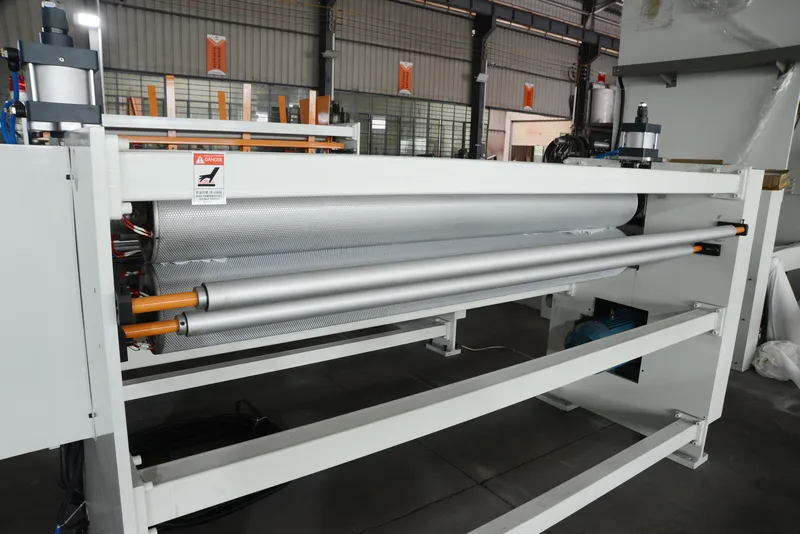
Integrating an economical glue lamination toilet paper machine increases your capital budget but opens profitable wholesale channels in commercial markets. This multi-ply bonding technology applies specialized industrial adhesives precisely across the paper web, enhancing sheet bulk, structural strength, and absorption properties. Adding these functional features allows your marketing team to price finished products at premium retail levels, accelerating initial investment recovery.
Furthermore, multi-functional machinery lines allow your plant to manufacture diverse product categories using a single underlying asset base. Utilizing a heavy-duty glue lamination toilet roll machine enables operators to alternate seamlessly between standard bathroom tissue and thick kitchen towels. This manufacturing flexibility minimizes the need to purchase separate specialized equipment lines, optimizing your total plant capital efficiency.
Raw Material Supply Chains and Initial Inventory Allocation
Your initial financial planning must allocate significant working capital for sourcing essential raw material consumables before commencing active manufacturing. Parent tissue jumbo rolls represent your primary variable production cost, requiring careful price negotiation with regional pulp mills. The grade of pulp selected, whether virgin wood fibers or recycled paper materials, directly alters your ongoing material expenses.
[Virgin Wood Pulp (Premium)]  --> High Absorption & Softness --> Premium Market Pricing
[Recycled Paper Mix (Budget)] --> Lower Initial Core Costs   --> Economy Market Pricing
Your procurement budget must also account for secondary chemical consumables required to operate automated lamination and packaging systems. Industrial adhesives for tail sealing, core winding, and multi-ply lamination must be purchased in bulk to ensure continuous operation. Securing reliable, long-term supply contracts protects your cash flow from sudden market fluctuations and prevents expensive raw material shortages.
Factory Infrastructure and Utility Installation Requirements
Preparing your industrial facility for heavy machinery installation involves significant secondary expenses that affect your startup budget calculations. The production floor requires specialized reinforced concrete foundations capable of supporting multiple tons of dynamic mechanical load without shifting. Additionally, advanced technical lines demand substantial architectural space planning to accommodate optimal material handling pathways and logistics workflows.
Industrial manufacturing equipment consumes significant volumes of electricity, compressed air, and vacuum suction during standard daily operating cycles. Technical teams must install heavy-duty transformers, centralized industrial air compressors, and localized air filtration networks across the factory floor. To receive a detailed asset layout blueprint tailored to your specific facility dimensions, please access our online inquiry form to consult with our applications engineers.
Comprehensive Operational Cost Breakdown and Technical Specifications
To manage your production facility efficiently, you must evaluate the complete balance between initial capital costs and ongoing operational expenditures. High-speed automation systems carry a higher purchase price but substantially lower your daily manual labor requirements and material wastage rates. This technical trade-off means automated plants achieve much lower total manufacturing costs per individual finished retail unit.
| Production Line Component | Automation Tier | Electrical Requirement | Estimated Cost Share |
| Primary Log Rewinding Unit | Fully Automated | 37 kW to 55 kW | 40% to 50% |
| Glue Lamination System | Integrated Mechanical | 11 kW to 15 kW | 15% to 20% |
| High-Speed Log Saw Cutter | Servo Motor Driven | 7 kW to 11 kW | 10% to 15% |
| Primary Roll Packing Section | Automatic Polymer Wrap | 5 kW to 8 kW | 15% to 20% |
Table 1: Technical parameter distribution and percentage share of total capital expenditure for modern tissue converting lines.
In addition to machinery depreciation, your annual budget must incorporate routine preventative maintenance schedules and mechanical wear parts replacement. Components like high-speed log saw blades, perforation knives, and embossing rollers require regular calibration and sharpening to preserve product quality. Factory managers should establish a dedicated spare parts inventory budget equivalent to five percent of the total machinery asset value.
Frequently Asked Questions (FAQ)
What is the average return on investment period for an automated tissue line?
Most commercial tissue manufacturing operations achieve full investment recovery within eighteen to thirty-six months following successful plant commissioning. This timeline depends heavily on local wholesale distribution margins, raw jumbo roll procurement costs, and factory capacity utilization rates.
How does web width configuration affect the initial machinery purchase price?
Broader web widths, such as 2.8 meters compared to 1.8 meters, increase initial machinery costs by thirty to fifty percent. However, wider machines drastically improve daily output capacities while utilizing the exact same number of machine operators, enhancing labor efficiency.
What electrical infrastructure upgrades are required for an industrial tissue plant?
An industrial tissue plant generally requires a dedicated three-phase electrical power supply delivering at least 100 kW of stable capacity. This infrastructure must include active surge protection networks and industrialized circuit breakers to safeguard sensitive PLC control systems from damage.
Build Your Production Line with Huaxun Machinery
Huaxun is a premier designer and manufacturer of high-performance tissue paper processing machinery engineered for demanding commercial environments worldwide. We specialize in developing robust, technologically advanced converting lines, high-speed rewinders, and automated packaging systems that maximize raw material utilization. Our engineering team provides comprehensive turnkey support, including custom factory floor layouts, mechanical installation supervision, and comprehensive operator training protocols. By partnering with Huaxun, your enterprise secures rugged structural durability, advanced servo-driven processing controls, and dedicated lifetime technical service support. We are fully committed to helping global investors establish highly efficient, profitable, and scalable paper manufacturing operations.
References
- Technical Association of the Pulp and Paper Industry (TAPPI): https://www.tappi.org
- International Organization for Standardization (ISO) Paper Industry Standards: https://www.iso.org/ics/85.060/x/

