
 +86 13505025697



How Can Converting Plants Optimize Glue Lamination in Kitchen Towel and Toilet Roll Rewinding Lines?
October 31, 2026
Plant managers often struggle to balance high-speed production with superior ply adhesion in household paper converting. Optimizing glue lamination during rewinding directly prevents delamination, reduces adhesive waste, and ensures uniform product thickness for both kitchen towels and toilet rolls. Producers achieve these results by calibrating application systems, selecting compatible adhesives, and maintaining precise web tension. This comprehensive guide explores technical strategies to elevate lamination quality, streamline operations, and maximize output efficiency in modern tissue converting facilities.
Understanding the Mechanics of Glue Lamination in Rewinding Lines
Glue lamination bonds multiple paper plies together to enhance absorption, thickness, and tactile feel in finished household paper goods. The process passes individual webs through specialized embossing stations where adhesive applies precisely to the crests of the paper patterns. Mechanical pressure then merges the plies, creating a permanent bond before the material reaches the rewinding drum.
Technical parameters dictate the success of this bonding phase. Adhesive viscosity, ambient temperature, and roller nip pressure directly influence how deeply the glue penetrates the paper fibers. Operators must monitor these variables continuously to prevent common defects like dry spots, adhesive bleed-through, and web wrinkling.
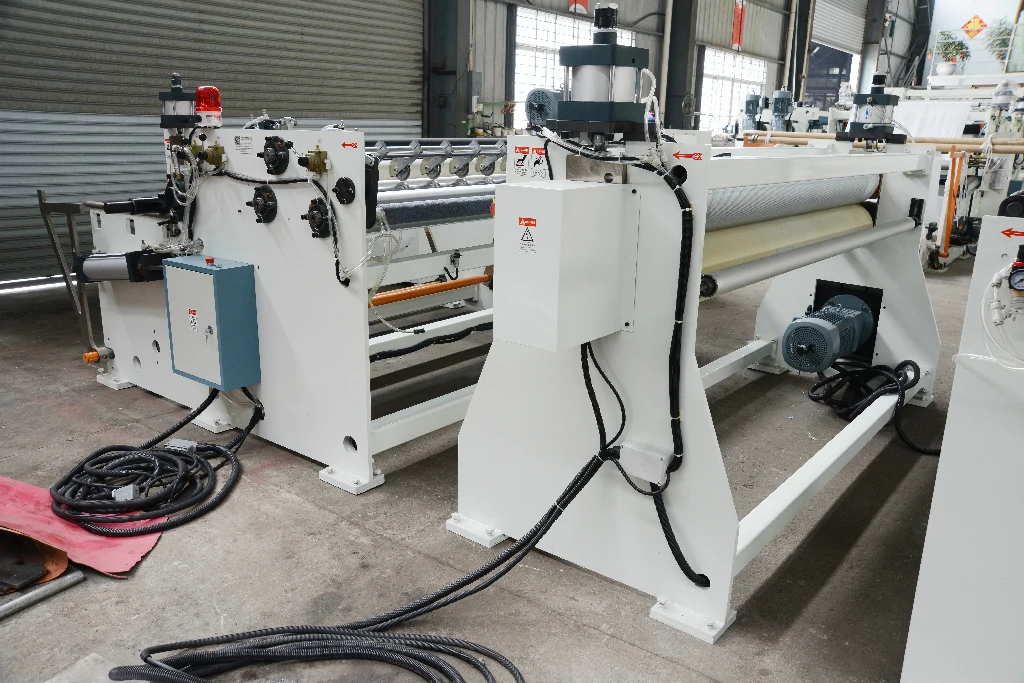
Modern production lines integrate advanced automation to control glue flow rates relative to machine speed. This synchronization ensures consistent adhesive volume even during acceleration and deceleration phases. Facilities running high-capacity operations frequently utilize specialized equipment such as a paper laminating embossing machine to achieve stable multi-layer bonding without compromising paper tensile strength.
Selecting the Right Adhesive and Application System
Adhesive selection forms the foundation of reliable lamination performance. Water-based polyvinyl alcohol (PVA) formulations remain the industry standard for tissue converting due to their safety profile, quick drying times, and strong bonding strength on cellulose fibers. Plant engineers must evaluate solids content and viscosity to match specific machine speeds and environmental conditions.
Application systems dictate how uniformly the adhesive reaches the paper web. Gravure roller applicators offer superior control compared to traditional wheel systems, depositing micro-dots of glue onto precise pattern areas. This targeted application minimizes adhesive consumption while eliminating the stiffness that excessive glue causes in soft facial or kitchen paper.
Maintenance routines determine the longevity and efficiency of the application system. Dried adhesive buildup on applicator rolls causes uneven transfer and pattern distortion. Implementing automated cleaning cycles and inspecting doctor blades daily prevents unplanned downtime and maintains optimal lamination clarity.
Controlling Web Tension and Embossing Pressure
Web tension fluctuations disrupt the alignment between the embossing rollers and the glue application unit. If tension is too high, the paper web stretches or tears during lamination. If tension is too low, wrinkles form, leading to weak spots and jammed rewinding rolls.
Servo-driven tension control systems maintain stable pulling force from the unwinding stand through the lamination unit to the final rewinder. Load cells monitor web tension in real time, allowing the PLC to adjust motor torques automatically. This precision keeps the paper register accurate at speeds exceeding 500 meters per minute.
Embossing pressure works in tandem with web tension to lock the plies together. Steel-to-rubber or steel-to-steel embossing configurations require exact gap settings. Technicians must calibrate roller parallelism regularly to distribute pressure evenly across the entire web width, preventing premature mechanical wear on the embossing rolls.
Enhancing Production Efficiency with Integrated Rewinding Solutions
Optimizing lamination is only one component of a high-performance converting facility. Seamless integration between the unwinder, embossing lamination unit, perforation station, and rewinder determines overall line productivity. Bottlenecks in any single section reduce the output of the entire plant.
Upgrading legacy equipment or investing in modern processing machinery helps manufacturers meet stringent market demands for kitchen towels and bathroom tissue. Facilities seeking robust, fully integrated manufacturing setups often examine dedicated production infrastructure like a complete kitchen paper towel making machine configuration to streamline workflow from jumbo roll to finished log.
Proper synchronization reduces paper waste during log changes and core loading. Automated tail sealing and automatic core feeding systems eliminate manual intervention, protecting operators and maintaining steady line speeds throughout multi-shift operations.
Ready to upgrade your tissue converting capabilities? Contact Huaxun today to discuss custom machinery solutions for your facility.
Troubleshooting Common Lamination Defects
Identifying and resolving lamination defects quickly minimizes scrap rates and protects brand reputation. Common issues include ply separation, excessive paper stiffness, and glue accumulation on machinery components. Systematic troubleshooting isolates root causes efficiently.
| Defect Type | Primary Root Cause | Corrective Action |
| Ply Separation | Insufficient adhesive transfer or low nip pressure | Increase roller contact pressure and check adhesive viscosity. |
| Paper Wrinkling | Incorrect web tension or misaligned guide rollers | Recalibrate load cells and verify roller parallelism. |
| Adhesive Bleed-Through | Excessive glue volume or low paper basis weight | Reduce gravure cylinder cell depth or adjust doctor blade angle. |
| Web Breakage | Excessive tension spike or brittle paper stock | Lower unwinder braking torque and check ambient humidity levels. |
Regular operator training ensures that frontline staff recognize early warning signs of mechanical wear or adhesive inconsistency before major production halts occur. Documenting maintenance logs helps engineering teams predict component lifespans accurately.
Frequently Asked Questions
What causes adhesive buildup on embossing rolls during rewinding?
Adhesive buildup typically results from incorrect glue viscosity, excessive application volume, or worn doctor blades. Adjusting the formulation and cleaning applicator components regularly resolves this issue.
How does paper moisture affect glue lamination quality?
Extremely dry paper absorbs adhesive too rapidly, causing weak bonds, while overly damp paper resists absorption and weakens structural integrity. Maintaining controlled humidity in the converting plant ensures stable lamination results.
Can a single machine process both toilet rolls and kitchen towels?
Many modern converting lines feature modular design configurations that allow quick changeovers between bathroom tissue and kitchen towel production by swapping embossing cassettes and adjusting perforation parameters.
Huaxun: Your Trusted Partner in Tissue Converting Machinery
Established in 2009, Huaxun stands as a professional manufacturer specializing in household paper processing equipment, integrating design, research, development, manufacturing, and global sales. Backed by strong engineering expertise and continuous innovation, Huaxun delivers reliable, high-efficiency solutions tailored to the evolving demands of the global tissue converting industry. The core portfolio features a full range of paper converting machine solutions, covering toilet paper, kitchen towel, facial tissue, napkin, and hand towel production lines. All equipment complies with international ISO 9001 quality management standards and CE certification, ensuring stable performance and long-term durability for clients worldwide.
References
- International Organization for Standardization. ISO 9001 Quality Management Systems Requirements. ISO Website
- European Commission. CE Marking Guidelines and Machinery Safety Standards. European Union Law
- Technical Association of the Pulp and Paper Industry. Paper Converting and Adhesives Technology Standards. TAPPI Website

